
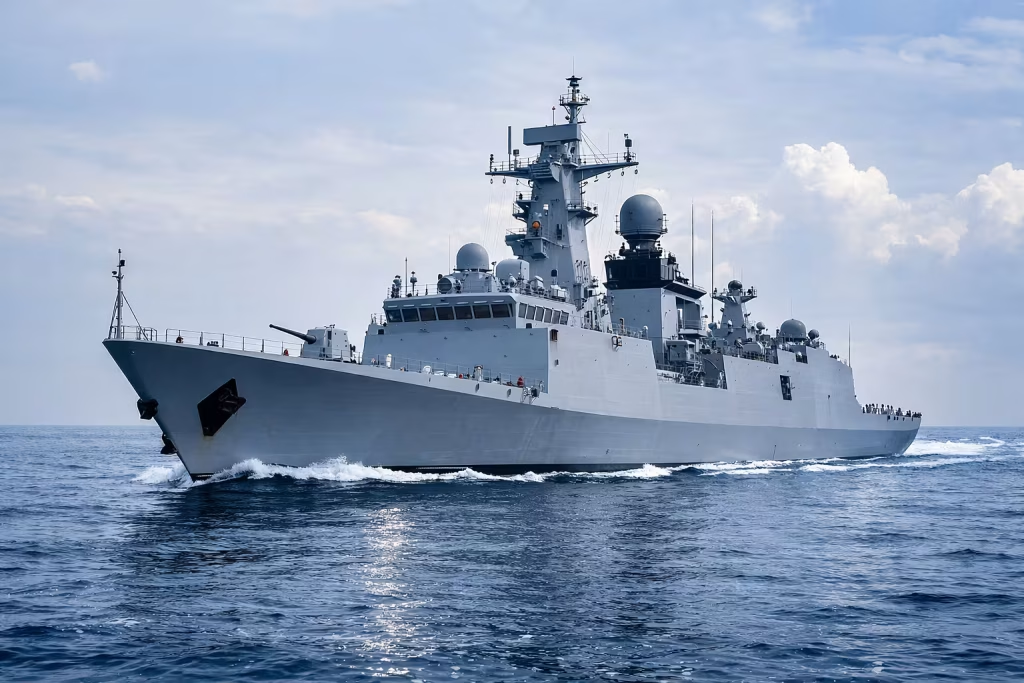
KARACHI: Operation Mohafiz Al-Bahr has drawn global attention as the Pakistan Navy escorts oil tankers through risky maritime routes to protect the country’s energy supply lines. The mission, launched on March 9, aims to ensure the safe return of Pakistani oil tankers amid rising tensions in strategic oil shipping corridors.
The Pakistan Navy has deployed warships to the Gulf region to escort Pakistani ships carrying vital oil supplies. This speaks volumes for the importance attached to the safety of Pakistani oil tankers.
Across the Arabian Sea, the presence of Pakistani naval ships sends a clear signal. Pakistan intends to safeguard its energy lifeline and Sea Lines of Communication (SLOCs) despite growing challenges in regional waters.
Naval Escort for Merchant Shipping
Two Pakistan Navy warships currently escort commercial vessels and guide them safely through this high-risk maritime corridor.
Maritime patrol aircraft also monitor the area and strengthen security along the route. These aircraft are providing awareness regarding the ships passing through this area, and these ships are in close proximity to the commercial ships.
Related: Pakistan Navy Visit to Oman Strengthens Maritime Ties
The reduced number of ships passing through this area reflects the gravity of this situation. According to maritime tracking sources, this sea route once handled about 138 ships daily but now sees only a few vessels passing through.
Pakistan is not waiting for the weather to get better on its own. Instead, it is the Pakistan Navy that is taking charge to facilitate the safe passage of its ships.
Global Media Notices the Operation
The mission has begun to attract coverage from international defense and maritime outlets, particularly in the United States and the Middle East.
Observers point out that Pakistan managed to move its vessels through waters where commercial shipping activity has slowed dramatically. The situation has grown so complex that even major maritime powers struggle to restore normal shipping traffic in the corridor.
Analysts say Pakistan’s move is significant because few countries actively escort their own oil shipments.
Modern Frigate at the Center of the Mission
Defense reports say a Tughril-class guided missile frigate leads the escort group. It is one of the most advanced surface combatants in the Pakistan Navy’s fleet.
The warship uses the Type 054A/P design, which offers strong capabilities in air defense, anti-ship warfare, and anti-submarine operations.
Its capabilities include:
- A stealth-optimized hull design
- Vertical launch missile systems
- HQ-16 medium-range air defense missiles
- Anti-ship cruise missiles
- Anti-submarine torpedoes
- A helicopter deck for maritime operations
Naval planners originally designed vessels like these for exactly this type of mission protecting merchant shipping in waters where multiple threats may exist.
It appears that satellite imagery currently circulating within open-source intelligence communities and dated March 10 confirms the presence of the frigate in the operational area.
Defense analysts believe a Yarmook-class offshore patrol vessel is supporting the escort mission.
Why the Mission Matters for Pakistan
In the case of Pakistan, its maritime security is directly related to its energy security.
Pakistan’s supply of LNG is almost entirely dependent on Qatar, and its supply of crude oil is almost entirely dependent on Saudi Arabia and the UAE. These crude oil and gas shipments pass through the Strait of Hormuz, one of the world’s most important maritime chokepoints.
So if there is any interruption in supply crossing through the Strait of Hormuz, it would directly impact Pakistan’s energy security.
Pakistan experienced a sharp increase in fuel prices on March 7. There was an increase of Rs55 in petrol prices, taking it to Rs321 per liter at the national level. Similarly, diesel prices increased to Rs336 per liter.
Sources say London-based insurance institutions triggered the sudden price increase after Protection and Indemnity (P&I) clubs refused to provide war-risk insurance for ships crossing the region.
A Strategic Move to Protect Energy Supplies
In such a backdrop, the decision to initiate Operation Mohafiz Al Bahr by Pakistan does not appear to be symbolic but rather strategic.
In the absence of insurance support and with the decline in shipping activities, Pakistan has been prompt in ensuring that oil ships continue to reach its shores.
For the time being, the operation is proceeding unnoticed on the high seas. However, the presence of Pakistani naval escorts on board oil ships has already caught the attention of analysts observing the developments in the region, especially with regard to the Strait of Hormuz and the Arabian Sea.
Until the tensions are resolved, Pakistan’s naval operation may prove to be the lifeline for the oil supply chain.


