
Pakistan is rapidly positioning itself as the region’s most aggressive adopter of fintech digital hub, even as India continues to dominate South Asia’s broader digital finance ecosystem, according to a new report by Forbes.
The country’s renewed regulatory momentum, revived venture capital inflows, and early embrace of digital asset innovation are helping Pakistan outpace several of its regional counterparts.
Fintech Investment Surges
Pakistan is in the midst of a strong rebound in fintech funding. After a challenging period for startups globally, investments in the Pakistani fintech sector doubled to US$26.3 million in 2024, and the upward trend has accelerated in 2025, with US$52.5 million raised in just the first half of the year.
With more than 450 fintech companies now operating in the country, total capital raised has climbed to US$391 million, highlighting the market’s resilience and renewed investor confidence.
The standout deal this year is the US$52 million pre-Series A round raised by Haball, a B2B digital invoicing, supply chain, and payments platform. The investment is particularly notable because Meezan Bank alone contributed US$47 million, underscoring the growing involvement of established financial institutions in Pakistan’s fintech ecosystem.
Haball is the country’s first fintech to receive a digital invoicing licence from the Federal Board of Revenue and is working to become a regulated payment initiation service provider integrated with the Raast instant payments system.
Regulatory Support Strengthens the Ecosystem
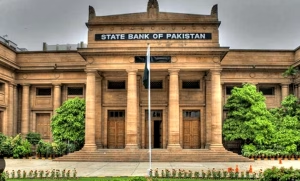
The sector’s growth is being reinforced by proactive government backing. The Pakistan Startup Fund is offering equity-free grants to attract domestic and foreign venture capital, while the State Bank of Pakistan has introduced a comprehensive licensing framework for digital banks.
These initiatives collectively aim to push adult financial inclusion from 64 percent in 2023 to 75 percent by 2028, marking one of the most ambitious financial inclusion expansions in the region.
Pakistan’s Distinctive Approach to Digital Assets
Pakistan is also setting itself apart in the digital asset space. While countries like Bangladesh and Nepal have imposed strict bans on cryptocurrencies, Pakistan has refrained from prohibition and is instead developing a virtual asset regulatory framework to manage risks while encouraging innovation.
The country recently gained representation in global crypto governance when Bilal Bin Saqib was appointed to the World Economic Forum’s steering committee on digital asset regulations. According to the finance ministry, his inclusion strengthens Pakistan’s voice in shaping international policy on blockchain and cryptocurrency oversight.
Investor interest has surged as well. Venture capital giant Andreessen Horowitz (a16z) recently led a US$12.9 million investment in ZAR, a Pakistan-based startup building a dollar-backed stablecoin designed for mass-market use through retail shops, mobile phone kiosks, and remittance agents.
Rising Global Recognition
Pakistan’s momentum is being reflected in global rankings. The country now stands at No. 3 worldwide in Chainalysis’s 2025 Global Crypto Adoption Index, behind only India and the United States. The ranking underscores Pakistan’s strong grassroots digital asset usage, driven by remittances, trading, and inflation hedging.
However, analysts caution that the long-term sustainability of this growth will depend on how Pakistan navigates its first major crypto shock, a test that could determine whether the country’s rapid rise in digital finance becomes a lasting transformation or a temporary surge.